Waste Management
About Our Service
Healthcare is a 24/7/365 activity and with our hospitals functioning around the clock, waste is being generated continuously. SCL offers Waste Management services that ensures the safe and efficient disposal of all types of waste generated within Trust facilities.
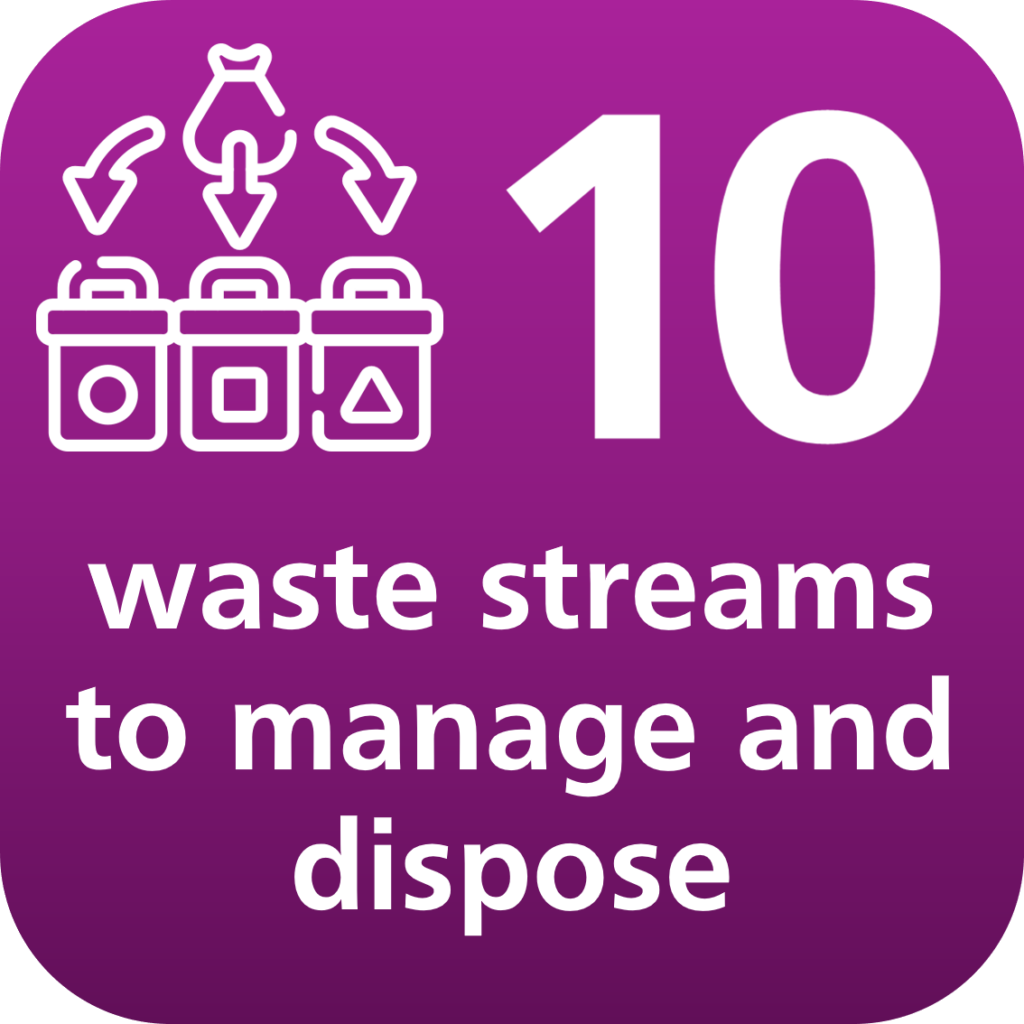
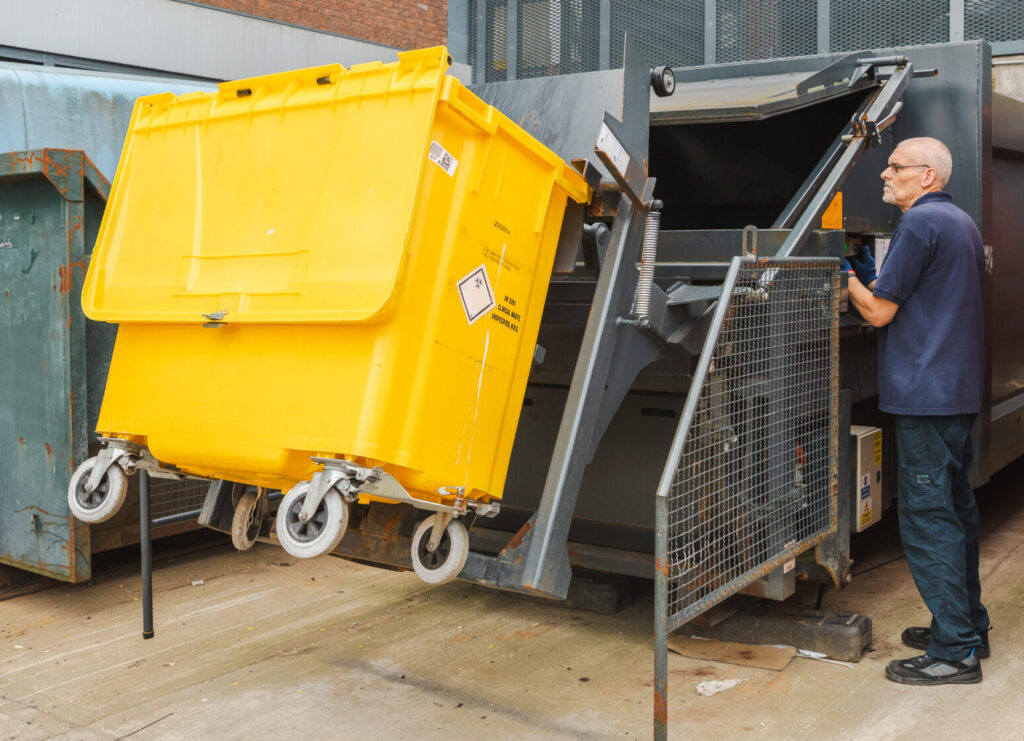
This includes clinical waste generated by medical wards, general waste, and hazardous materials like sharps or infected waste. We coordinate closely with external waste disposal companies to address the logistical challenges of waste collection and disposal, and ensure that all waste is removed from the respective site quickly and efficiently.
The Waste Manager is responsible for developing and implementing waste management policies and procedures that comply with local, national, and international regulations and that follow NHS England’s guidelines closely, to ensure all our waste management activities are compliant with HTM 07-01 safe and sustainable management of healthcare. This includes careful consideration of the sustainability and environmental impact of our waste management processes and disposal methods.
We also investigate, develop and promote opportunities to reduce waste generation and to improve waste hierarchy outcomes. We audit and develop standard operating procedures, share best practice and play a pivotal role in educating, engaging and empowering Trust staff to implement improvements in waste reduction and waste hierarchy that benefit departments and the organisation.
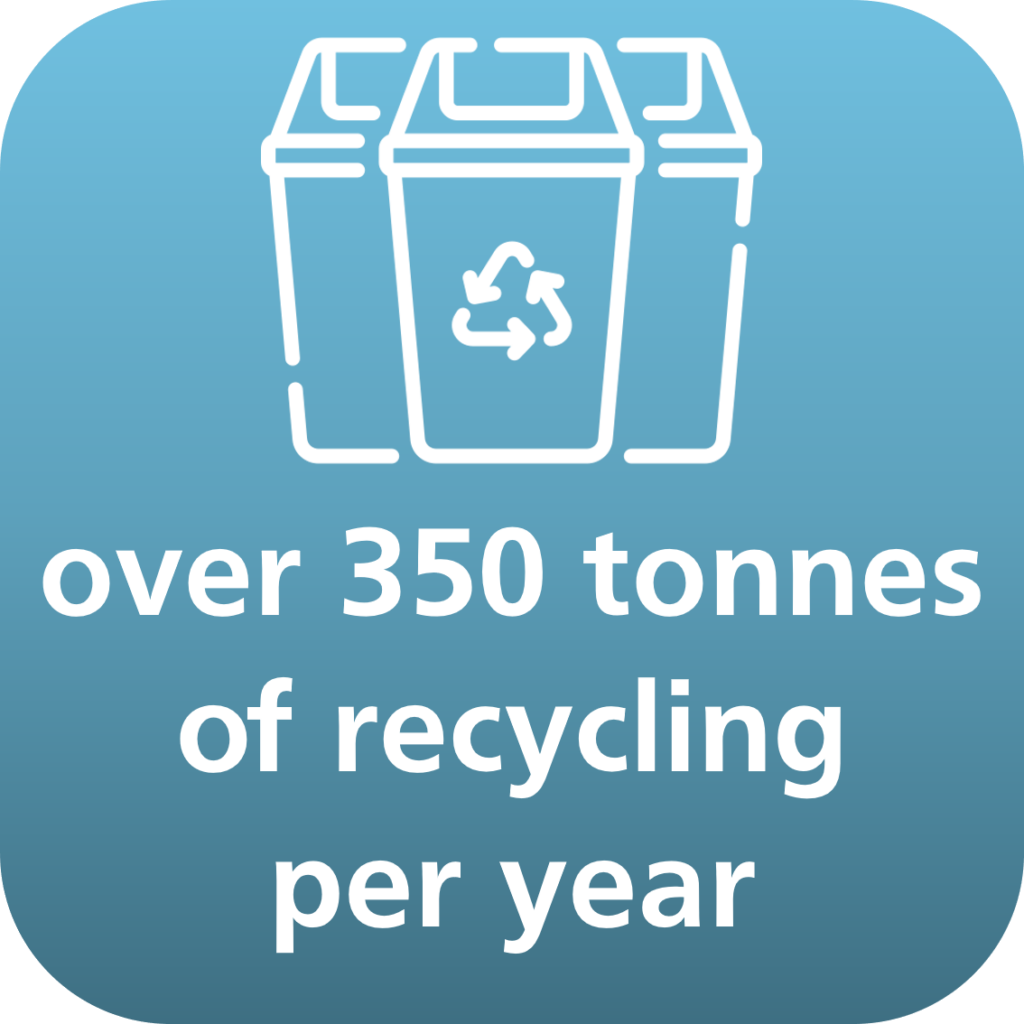
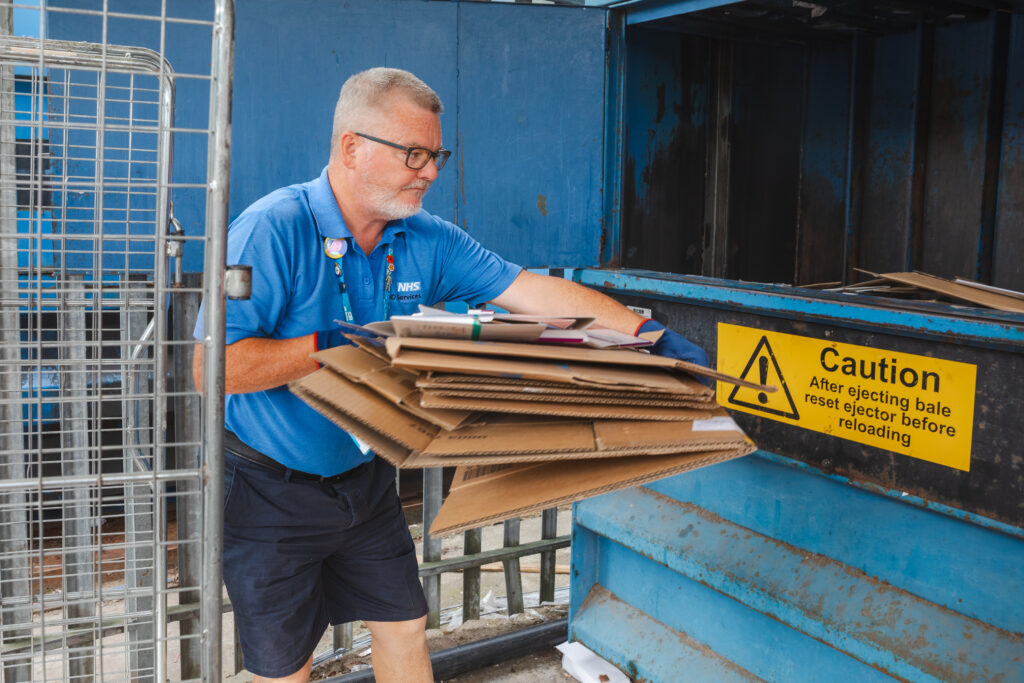
As part of the Government’s Simpler Recycling reforms, the Trust is continuing to expand and improve its recycling infrastructure to ensure greater consistency in waste segregation and resource recovery. We encourage all staff to segregate waste correctly at the point of generation, ensuring recyclable materials such as paper, cardboard, plastics, metals, and glass are captured and processed appropriately.
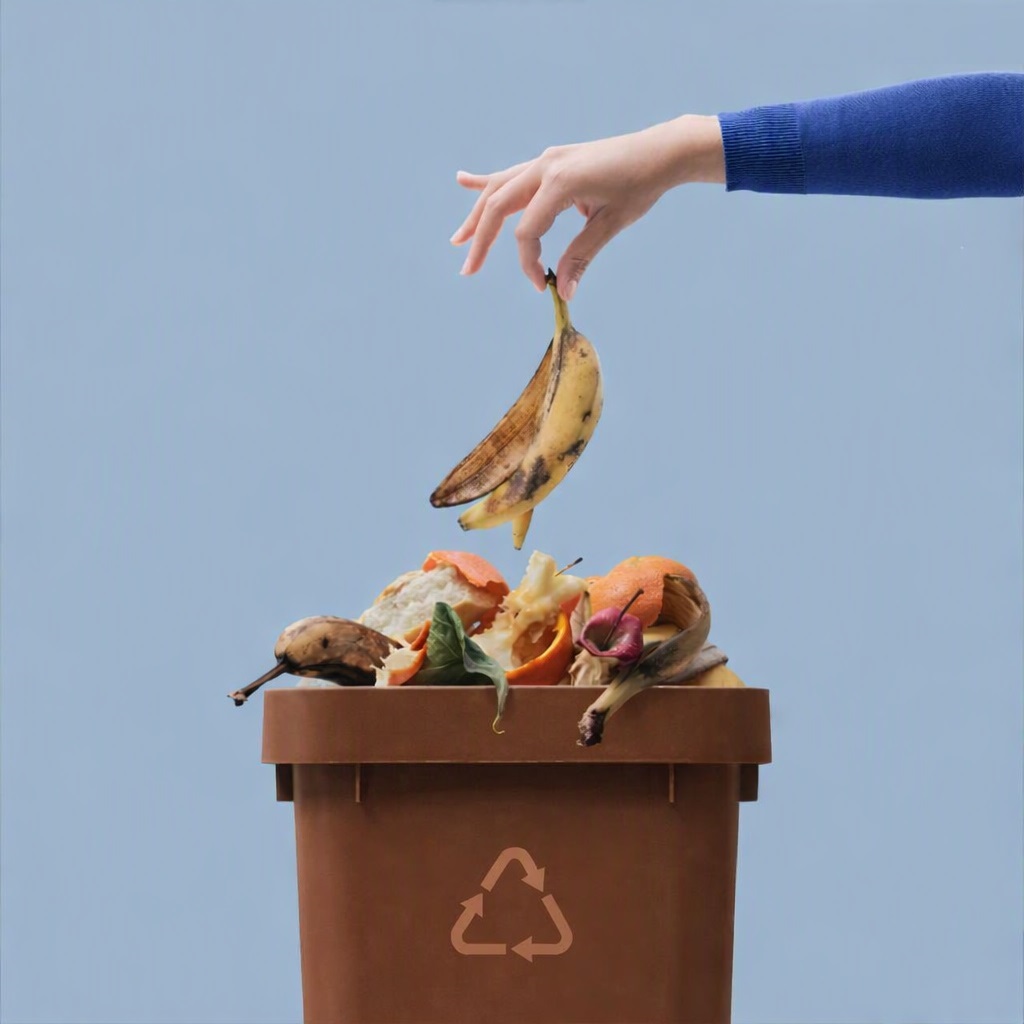
We are also implementing dedicated food waste collection services across our sites, helping to divert organic waste away from residual disposal routes.
Food waste collected from Trust sites is sent for treatment through Anaerobic Digestion (AD), a natural process that breaks down organic material in the absence of oxygen. This process produces renewable biogas, which can be used to generate electricity and heat, as well as a nutrient-rich digestate that can be used as a fertiliser in agriculture.
By recycling food waste through AD, the Trust reduces greenhouse gas emissions associated with disposal, supports the generation of renewable energy, contributes to a circular economy, and helps achieve national NHS sustainability and Net Zero goals.
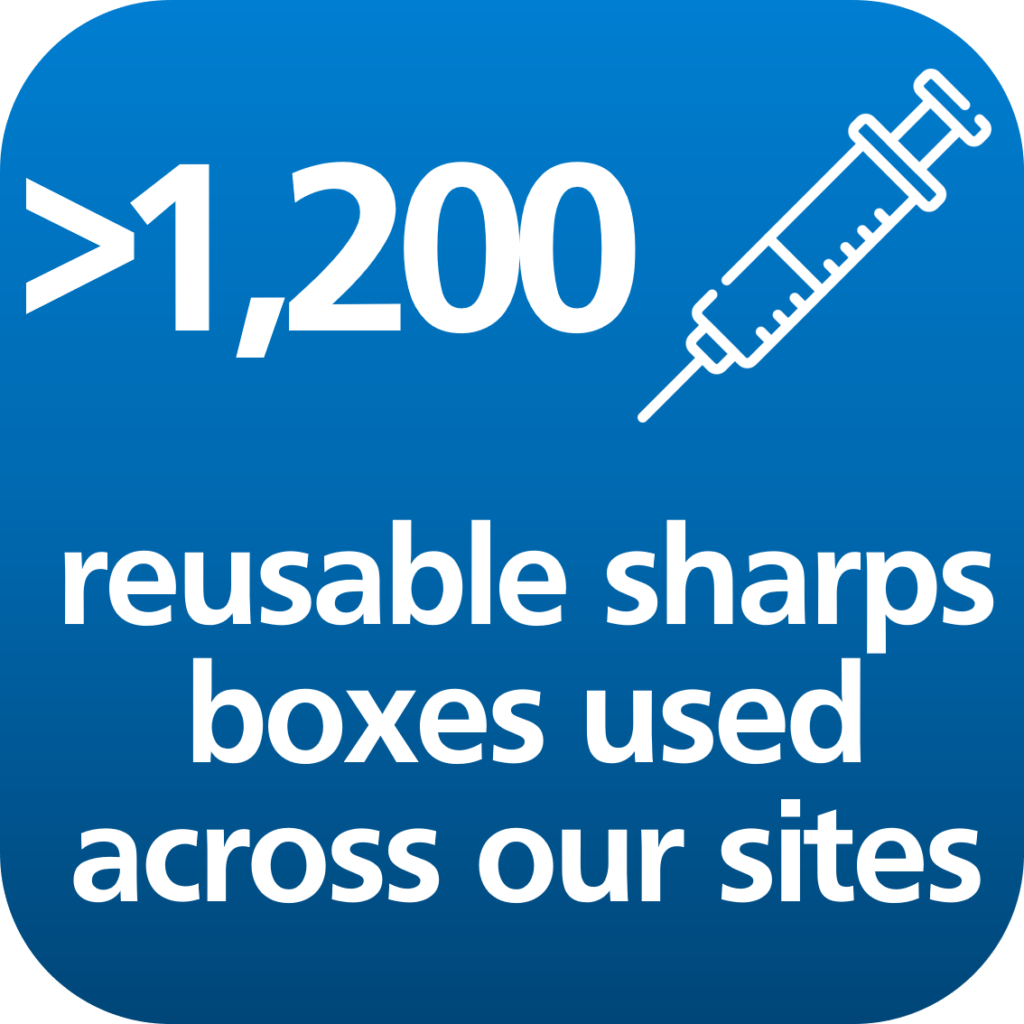
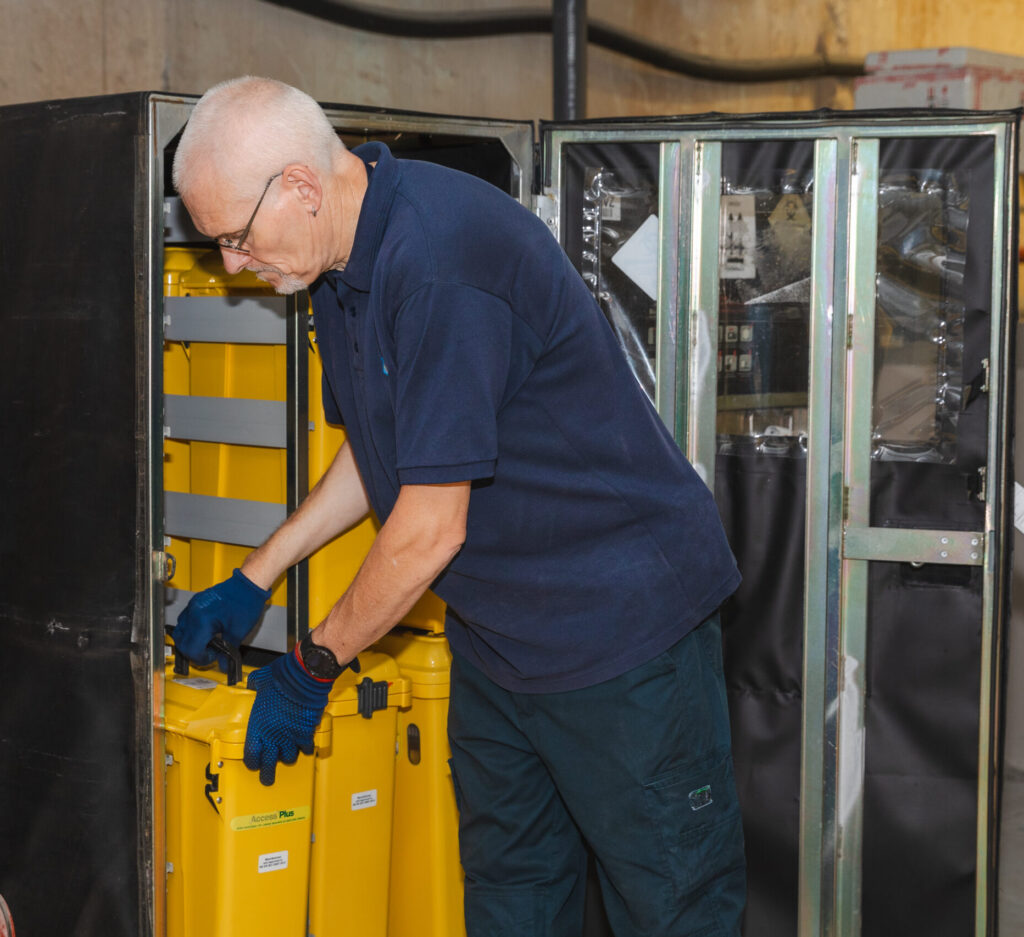
In addition, we promote the use of reusable products wherever clinically appropriate, such as Sharpsmart reusable sharps containers, reducing reliance on single-use products and lowering both environmental impacts and disposal costs.
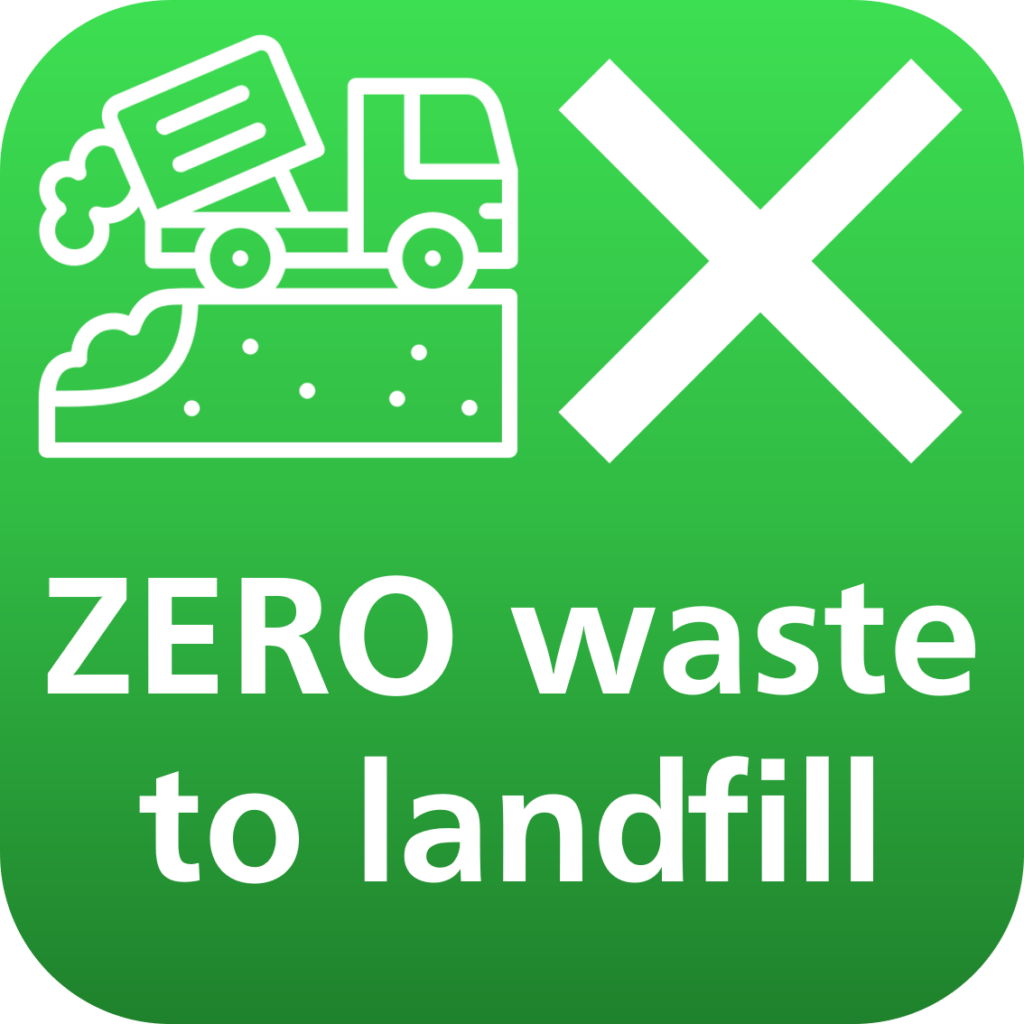
Residual offensive waste that cannot be recycled is treated through Energy from Waste facilities, where it is used to generate electricity and heat. By increasing recycling rates and improving waste segregation, we can reduce the volume of waste requiring treatment through more costly and carbon-intensive disposal routes.
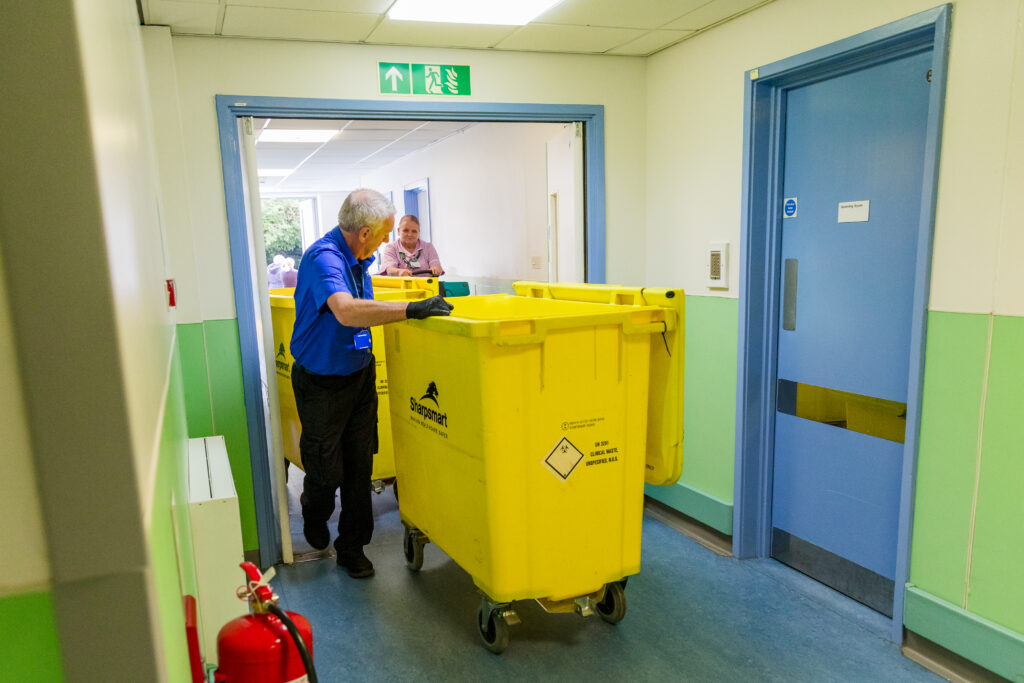
Through effective waste management and compliance with evolving environmental legislation, we help protect the health and safety of patients, staff, visitors, and the wider community. At the same time, we contribute to the Trust’s sustainability ambitions, reduce carbon emissions, conserve valuable resources, and help deliver financial savings that can be reinvested into improving patient care.
Staff Progression
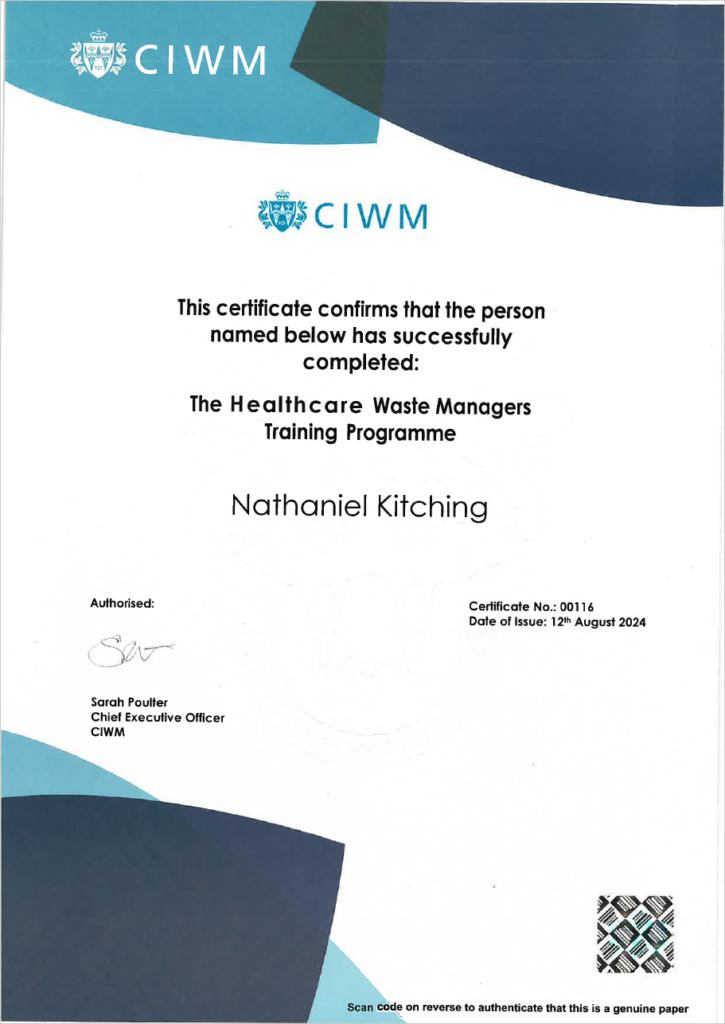
Completed Healthcare Waste Management training course
and
Technical Member of the Chartered Institute of Waste Management

Key Facts